
Gear Oil Additive Packages Explained Simply
Leave a message
What's the secret behind a durable car gearbox? The answer lies in a scientifically blend of additives in the gear oil. This article explains the basics of gear oils and gear oil additive packages.
What is a vehicle gear oil additive package?
A vehicle gear oil package is an integrated additive mixture formulated from a variety of functional additives through scientific optimization and precise balancing.
It is made to handle the tough conditions inside vehicle gears-like high pressure and sudden shocks. The mix has a lot of "extreme-pressure" additives to prevent wear, plus other ingredients that stop oil from breaking down, prevent rust, and reduce foam.
This package is specially designed to meet the demanding needs of modern vehicle gearboxes. It is a complete, ready-to-use solution for making gear oil. Lubricant makers simply buy the additive package, mix it with a base oil following simple steps, and get a finished gear oil that meets industry standards. This makes production easier and ensures the oil works well and performs reliably.
As the additive industry has grown, using these ready-made packages has become common worldwide. Most lubricant products are now made this way, making it simpler for companies to produce and market their oils.
Gears Explained Simply
Gears are at the heart of a car transfers power. The friction between gears involves a mix of lubrication types.
Generally, the Gear motions combine both sliding and rolling, along with extreme impacts and high heat. To protect the gears from extreme pressure, wear, and heat-related oil breakdown. The engineers designed lubricants specially for gearboxes.
It is cucial to choose the right gear oil according to the specific type of gear motion and how much load they carry.
Different gear types experience friction in very different ways. For instance, spur gears involve a mix of rolling and sliding, so they need only a basic level of protection. Helical and spiral gears, however, have multiple teeth in contact and carry higher loads, so they absolutely require oils with strong extreme pressure protection. Worm gears operate mostly through sliding motion, so they need oils specially designed to manage friction effectively.
| Gear Type | Key Friction Features | Lubrication Priority |
| Spur Gears | Line contact, combined sliding & rolling, high impact. | Wear & shock resistance. |
| Helical Gears | Gradual engagement, long contact lines, high sliding friction, axial thrust. | High film strength, heat dissipation, wear resistance. |
| Double-Helical Gears | Similar to helical gears, but axial thrust is balanced, higher load capacity. | Similar to helical gears, with higher extreme pressure requirements. |
| Hypoid Gears | Very high sliding friction, high speed & pressure, significant heat. (Main in automotive axles) | Ultra-high extreme pressure & anti-wear (requires GL-5 gear oil) |
| Worm Gears | Almost pure sliding, very high sliding speed, low efficiency, high heat. | High lubricity/oiliness,Specialized formulations |


|


|


|
Quality grades of gear oils
Vehicle gear oils must possess specific properties to ensure the normal transmission and long service life of gear systems. Key performance requirements include: extreme pressure anti-wear properties, viscosity-temperature characteristics, corrosion resistance, oxidation stability, and anti-foaming properties.
Currently, the quality grades of gear oils in use are mainly determined by a series of standards specified by API.
| Item | Description | Notes |
| GL-1 | For very mild operating conditions. Basic refined mineral oil is sufficient. May include anti-oxidant, anti-rust, and anti-foam additives to improve performance. | No longer in use. |
| GL-2 | For automotive worm gear rear axle lubrication, when GL-1 is not sufficient under higher load, temperature, or sliding conditions. | No longer in use. |
| GL-3 | For moderately severe manual transmissions and mild hypoid gears in vehicles. Offers higher load-carrying capacity than GL-1 and GL-2, but lower than GL-4. | No longer in use. |
| GL-4 | For moderately severe spiral bevel gears and mild hypoid gears. Can be used in manual transmissions and drive axles. Still commercially available, but testing equipment for performance evaluation is no longer obtainable. | Still used commercially |
| GL-5 | For gears operating under high-speed/low-speed and high-torque conditions, especially hypoid gears in rear axles. | Current mainstream standard. |
| MT-1 | For non-synchronized manual transmissions in buses and heavy-duty trucks. Provides protection against thermal degradation, wear, and seal deterioration - performance not covered by GL-4 or GL-5. | Specifically for non-synchronized manual transmissions. |
What determines the performance of a gear oil?
The final performance of gear oil is determined by both the base oil and additives:
The base oil determines physical properties: key physical properties such as viscosity and pour point are primarily derived from the selected base oil itself. Viscosity is the most important indicator.
Additives provide functional characteristics: various special properties required by gear oil (such as extreme pressure anti-wear, anti-oxidation, rust prevention, etc.) are achieved by adding appropriate additives.
A high-performance additive package is key to formulating high-performance, cost-effective gear oils.
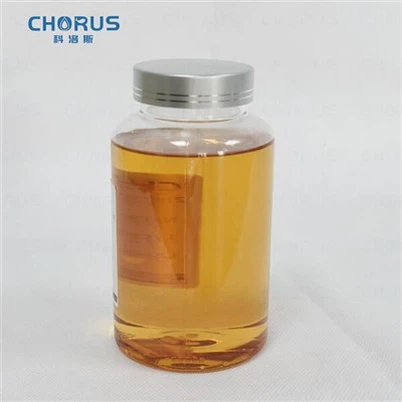
Chorus offers a portfolio of gear oil additive packages for gear oil formulations and blending solutions. In particular, the additive package T4231 is an eoc-friendly vehicle gear oil additive with low dosage. Vehicle gear oils (80W90) with T4231 added have passed all SwRI bench tests: L-37, L-42, L-33, and L-60.
Gear oil additive package Chorus T4231 offers extremely high cost-effectiveness and is suitable for blending various vehicle gear oils of grades GL-4 and GL-5. Get in touch for the detailed performance of Chorus T4231.

What are the typical testing items for gear oil?
Common gear oil testing items generally include: physical property testing, chemical property testing, cleanliness and impurity testing, stability and durability testing, rust prevention performance evaluation, and related tests for scratch resistance, wear resistance, and pitting resistance.
physical property tests
| Test Item | Why It's Important |
| Kinematic Viscosity | The "thickness" of the oil. Too thin = insufficient protection. Too thick = wasted fuel/energy. |
| Pour Point | The lowest temperature the oil can be used at. Determines if it can start normally in winter. |
| Apparent Viscosity | The oil's thickness during cold starts. Gear oil too thick leads to insufficient lubrication and increased wear in the gearbox. |
| Flash Point | High flash point indicates good stability at high temperatures, low volatility, and ensures safety during gearbox operation. |
| Foaming Tendency | Whether the oil foams, and how much. Too much foam reduces lubrication and increases air contact, leading to premature aging. |
Chemical property tests
| Test Item | Why It's Important |
| Sulfur Content | Sulfur is a key extreme-pressure/anti-wear (EP/AW) component in modern gear oil. Too little = poor wear resistance. Too much = metal copper corrosion. |
| Phosphorus Content | Sulfur is a key anti-wear and anti-rust component. It indicates the level of anti-wear and anti-rust additives in the gear oil. |
| Other elements | other element in the gear oil additives |
Stability and Durable Testings
| Test Item | Why It's Important |
| Shear Stability | Simply, the oil is sheared at high speed for 20 hours to see if it thins significantly. Oil that maintains viscosity means oil film strength is preserved, ensuring sufficient lubrication. |
| Thermal-Oxidation Stability | The oil is heated and exposed to air to simulate long-term high-temperature use, showing how quickly the oil "ages" under heat. |
| Storage Stability | Sealed oil is stored for a period to check if it "separates or forms sediment" over time. |
Cleanness and Impurity Test
| Test Item | Why It's Important |
| Water Content | Heating the oil to measure evaporated water. Less water is better; ideally none. Water damages the oil film, accelerates oxidation, and promotes corrosion. |
| Mechanical Impurities | Filtering the oil to check residue. Less impurities are better; high-quality oil should have no visible impurities. |
Anti-Rust Performance Tests
| Test Item | Why Test? |
| Copper Strip Corrosion Test | A copper strip is soaked in hot gear oil for 3 hours. The less color change on the copper strip, the better. |
| Rust Test - Cover Plate | Simulates a humid gearbox environment. The smaller the rusted area, the better. |
| Rust Test - Gear Surface | Simulates a humid gearbox environment. Observes the gear surface after testing. No rust at all = excellent. |

Anti-Scuffing Test & Anti-Wear Test & Anti-Pitting Test
| Test Item | Why? |
| Anti-Scoring Test (FZG/L-42) | Simulates gears working under high-speed, high-shock loads (vehicle rapid acceleration, emergency braking). Evaluates the performance of extreme pressure additives under instant high load. Passing standard: gear surface shows no scoring marks. |
| Load-Carrying Capacity Test (L-37) | Simulates heavy load, low speed, high torque conditions (heavy-duty climbing, sustained full-load long-distance transport). Runs for 7.5 hours, testing gear surface resistance to pitting and wear. Inspects gear surface damage. Passing standard: gear surface shows no pitting or wear. |
How to evaluate whether a gear oil Additive Package is qualified?
Generally speaking, for vehicle gear oils, in addition to basic physicochemical testing, to evaluate the performance of a gear oil, we also need bench simulation testing and field tests to determine whether the gear oil meets the requirements.
What is bench testing?
Think of bench testing as a series of simulated exams for lubricants in a lab.
They simulate situations like: Heavy loads (like climbing a steep hill), High speeds, Extreme heat
This way, they can scientifically measure how well the oil protects against wear, sludge, and breakdown long before it goes into any engine.
The most respected and strictest "exam board" for this is run by the Southwest Research Institute (SwRI) in the United States.
If an oil passes their rigorous tests, it's like getting a passport with the highest trust. It means the oil's performance data is backed by the credible authority in the world.
Bench testing for gear oils mainly includes:
- L-42 Anti-scuffing test
- L-37 Load-carrying capacity test
- L-33 Corrosion test
- L-60 High-temperature oxidation test.