
Why Gear Oil Requires Antifoam Additives?
Leave a message
The continuous circulation and flow of the oil in the lubricant system creates large foam, especially in gear oil. When operating, the gears are running a high speed, and the large foam will cause low pressure, low lubricity, blockage, and gas resistance. At the same time, it will accelerate the oxidation of gear oil and cause poor lubricity of gear oil.
Adding an antifoam additive to lubricant oil is an easy and highly efficient way to solve the above problems.
The mechanism of the antifoam additive
Defoaming is the reverse process of foam stabilization. Mechanistically, it includes 2 aspects:
- Inhibiting the production of foam
- Removing the existing foam
The defoamer has a high surface activity and can form a new surface film or change the original film to reduce the intensity of foam.
Commonly, the antifoam agents are insoluble in oil; they exist in the oil in the form of highly dispersed colloidal particles. The dispersed antifoaming agent particles adhere to the foam, sink into it, and become an integral part of the foam. and then expand on the foam, which causes the foam to break and rupture.

The Main Types of Antifoam Additives and The Influence on Industrial Gear Oil Performance.
Antifoam additives mainly include silicone-based antifoam agents, non-silicone-based additives, and composite defoamers.
Silicone Antifoam Agents
Additive dosage:0.0001~0.001%
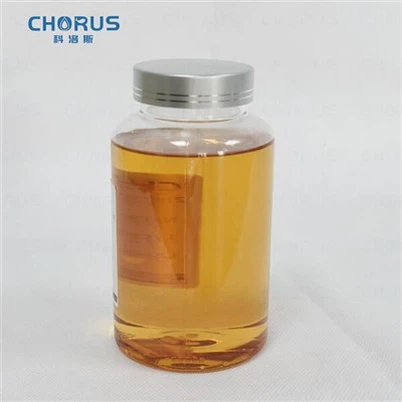
AF-3 silicone-based anti-foam additive has a good antifoam efficiency, it's mainly through reducing the foam surface tension to achieve the anti-foam effect.
AF-3 is a poly siloxane type lubricant defoamer; its main chain has the structure of Si-O-Si and has a low solubility in water and lubricant oil, which is widely used in engine oil, gear oil, and industrial oils.

Features of silicone-based antifoam agents.
- Low surface tension: it can remove the foam quickly and efficiently that is produced under the environment of intense gear stirring, pressure circulation, and high temperature, which avoids foam gathering and ensures foam can form a continuous and complete lubricant oil film.
- AF-3 silicone-based anti-foam additive has a low solubility in oil and water, and has a high surface activity.
Low solubility can provide a long-term anti-foam guarantee for gear oil and ensure the lubricity.
The high surface activity enables it to preferentially adsorb at the gas-liquid interface. Even adding a very small amount can reduce the foam stability significantly.
The low volatility and chemical inertness mean that the gear system under high-temperature conditions, the defoamers are not easily lost because of evaporation. This can help keep the anti-foam performance in the whole oil change cycle.
3. Good thermal stability, low freezing point, and a good viscosity temperature in a wide temperature range, which will not influence the overall viscosity and viscosity temperature performance.
Non-silicone anti-foaming agent AF-5
Non-silicone anti-foaming additive AF-5 works mainly through changing the molecular attraction between the membrane layers, reducing the strength and toughness of the membrane, to realize the aim of decreasing the foam stability.
The non-silicone antifoam additive AF-5 provided by Chorus is a mixture of synthetic hydrocarbons and polymer. Used in steam turbine oil, gear oil, and other lubricant oils, the defoaming performance will be lost due to the long-term use of silicone-based anti-foam additives. Therefore, usually use a non-silicone anti-foam additive.

The defoaming performance effect of the non-silicone-based anti-foam additive is lower than that of the silicone anti-foam additive, and it requires a bigger addition(0.005%-0.05%).
However, it has little influence on the air release value of the oil. And it's not easily separated from gear oil and has good anti-foaming stability.
Composite anti-foaming additive:
Due to the non-silicone anti-foaming agent AF-5 and silicone anti-foaming agent b having their own advantages and shortcomings, using them alone is unlikely to realize a satisfactory to every oil.
Composite anti-foaming agent balance their advantages and shortcomings and are composed of them in an appropriate ratio.
Silicone-based antifoam additive has a good defoaming performance, with a small addition amount. It's easy to make the oil air release worse, and it has poor dispersibility; it's too prone when storage for a long time.
Silicone-free anti-foaming agent has a low defoaming efficiency, a larger addition amount, a low influence on air release, and a good anti-foaming performance.
Using the 2 anti foam together can complement each other's strengths.
- Tips:
The defoaming performance of different formulations can be different; you are advised to test the sample and evaluate.
If you store the andi-foam additive for a long time, we suggest you stir before using.
Chorus is a professional lubricant additive supplier. We can provide you with various lubricant additives formulated with anti-foam additives and used for gear oil, such as detergent additives, extreme pressure (EP) anti-wear additives, anti-rust additives, etc.
Contact us, and get a professional solution.