
Polymer Quenchants Formula Secret: Why High MW PAG is the Key Ingredient?
Leave a message
In modern heat treatment, quenching media play a key role in controlling cooling rate, hardness, and deformation. Water-soluble high MW polyalkylene glycol (PAG) for polymer quenchants has the features of stable performance, non-pollution, and non-flammability.
And through controlling the concentration to adjust the cooling ability, and based on satisfying the requirements for the depth of the hardened layer and the hardness of the quenching process, to realize the aim of reducing the deformation of the workpiece during the polymer quenching process.

The limitation of the traditional quenching media
- Using water and water solutions as quenching media
Water is the earliest, most widely used, and most economical quenching medium. It's cheap and easy to get, non-toxic and non-flammable, physically and chemically stable, easy to use, ingredient stable, and non-prone to deterioration.
Pure water is only suitable for the quenching of a small number of steel parts with little carbon content, low hardenability, and simple shapes.
When using water quenching, although the water can make the metal parts cool in a very short time, it's not suitable for the quenchant of most metals, as it's easy to make the metal parts crack due to deformation.
- Using oil for formulating quenchants
Oil quenching mainly includes: high-speed quenching oil, brightening quenching oil, and vacuum quenching oil.
Using oil quenching, the cooling speed is relatively low, compared with some quenching process requirements, which leads to difficulty in getting the parts with ideal physical performance. It's easy to burn, and using oil quenching, the workpiece surface is hard to clean; the oil fluid after cleaning is related to environmental problems.
- Other quenching media
The other quenching media, like molten salt, molten alkali, and liquid-gas atomized quenching medium has their advantages and shortcomings in polymer quenchant formulas.
Although molten salt and molten alkali have good cooling performance and small deformation, they have the shortcomings of large pollution, high cost, energy consumption, and easy aging. They will corrode the workpieces and are a risk and a stimulus to operators.
Liquid-gas atomized quenching is flexible, but the cooling speed is difficult to control precisely. The process stability is poor, and it is highly dependent on the workpiece's materials and shape, which are easily deformed and prone to quenching cracking.
Using water-soluble high-MW PAG for quenchants formula
The principle of high MW polyalkylene is used for the quenching formula.
Using MW polyalkylene (PAG) for the quenching formula, the water fluid is inverse soluble: the workpiece sinks in the fluid at a high temperature, the PAG's surface will form a uniform separated heat film to reduce the cooling speed at first.
With the temperature decrease of the workpiece, the film will dissolve again and accelerate the cooling speed. The controllable cooling process can reduce the deformation and cracks.
Polymer quenchants are widely applied in heat treatment to achieve stable and controllable quenching performance.
The features of high molecular weight PAG for quenching formula.
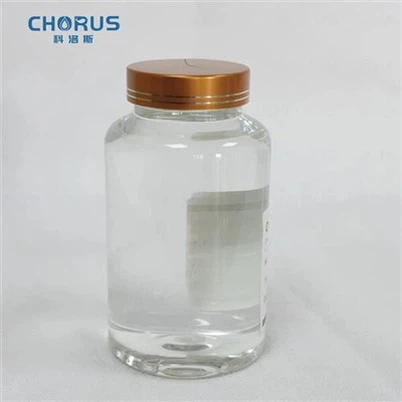
Chorus can provide you with a series of high molecular weight polyalkylene glycol (PAG) for a polymer quenching formula.
Our high MW polyalkylene glycol (PAG) includes 75W-18000, 75W-23000, 75W-50000, and 75W-70000.
(Performance comparison of the 3 mainly quenchant media)
|
Performance |
water |
Quenching oil |
High MW water-soluble PAG |
|
Cooling speed |
Extreme fast, especially in the low temperature stage, which easily leads to workpiece deformation and cracks. |
Low and uniform, insufficient hardening capability |
Controlling cooling speed through concentration adjustment, it lies in water and oil. The cooling curve can be controlled. |
|
Safety and environmental protection |
No burning risk |
Flammable, with risks of fire and smoke pollution |
Non-flammable, non-pollution,no-smoke, friendly working environment |
|
Cost and maintenance |
Low cost, easily perishable, and high temperature controlling requirements |
High initial cost, waste oil disposal issues |
Consume less energy, long lifespan, low comprehensive cost |
|
Workpiece quality |
High hardness, easy to deform and crack. |
Small deformation, insufficient hardness, workpiece is contaminated with oil. |
Deep and uniform hardened layer, low tendency for deformation and cracking, relatively clean workpiece |
In the quenchant polymer application, the inverse solubility and Hydrophilic–Lipophilic Balance (HLB) of high MW water-soluble polyalkylene glycol (PAG) work together to realize the precious controlling to cooling speed, which is the core of the high MW PAG quenchant formula.
1. Inverse solubility(cloud point)
When the workpiece sinks into the polymer quenchant fluid, the solubility of PAG will decrease in the water fluid under high temperature and precipitate on the metal surface to form a polymer film to inhibit the steam and reduce the initial quenching severity.
With the temperature decrease, the PAG will resolve again and recover the convective cooling to quench stably and controllably.
2. Hydrophilic–Lipophilic Balance (HLB)
High HLB, the PAG will have strong hydrophilicity, a weak film-forming ability, and a faster cooling rate. Low HLB, the PAG will have a higher proportion of hydrophobic segments, good film-forming, and a lower cooling rate, which is beneficial to reduce deformation and cracks.
Through adjusting PAG's structure, HLB, and concentration, a cooling curve that lies between water and oil can be obtained, meeting the quenching requirements for different steel grades and workpiece sizes.
High molecular weight water-soluble PAG for polymer quenchants formula has the features of controllable cooling rate, balancing both quenching penetration and low deformation. Non-flammable, environmentally friendly, clean, and safe. Its comprehensive performance is better than traditional water and quenching oil.
Chorus is a professional lubricant additive supplier. We can provide you with different molecular weights and viscosity PAG and other lubricant additives, such as high viscosity water soluble PAG (polyalkylene glycol) for HFC fluids
Contact us to get more detailed information.