
What is Total Base Number (TBN) in Lubricant or Lubricant Additives
Leave a message
What is Total Base Number (TBN) in Lubricant or Lubricant Additives
It is an index for determining effective additive components in engine oil; simply, it is an index of the engine oil's Alkaline Reserve.
Total base number (TBN) refers to the content of basic additives in lubricant, which is an important index to evaluate the ability of lubricating oil to resist acid corrosion. When the fuel burns, it produces harmful gases such as nitrogen oxides, sulfur oxides, and methane in the engine. These harmful gases will dissolve in the engine oil and form acidic chemicals. If the lubricating oil contains enough basic additives, it can neutralize these acidic compounds and protect the engine from acid corrosion.
The TBN indicates that the sample contains organic and inorganic bases, amino compounds, weak acid salts such as soaps, basic salts of polybasic acids, and salts of heavy metals. The TBN of internal combustion engine oil can indirectly indicate the amount of detergent and dispersant it contains. During the use of internal combustion engine oil, analyzing the change in its total base number can reflect the consumption of additives in lubricating oil.
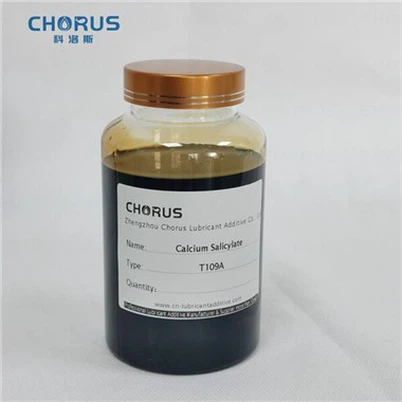
In the lubricant, TBN shows the Alkaline Reserve, which mainly comes from the detergents, such as Calcium Sulfonate, Magnesium Sulfonate, Calcium Salicylate, Calcium Phenate, and other types of lubricant detergent additives.
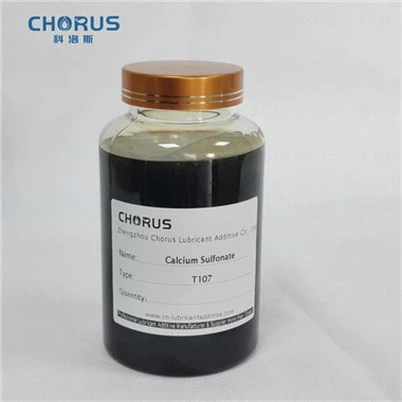
Calcium Sulfonate ( Basic Calcium Alkylbenzene Sulfonate), this lubricant additive is also used as a TBN booster to enhance the Alkaline Reserve in the engine oil formulas.
In oil condition monitoring, TBN is always a critical metric for determining remaining oil life.
| Indicator | Significance | Action Signal |
| High TBN Residual | Sufficient alkaline reserve to protect the engine continuously. | May extend oil change interval |
| Sharp TBN Decline | Additives depleting rapidly → Possible excessive acid generation due to poor fuel quality/combustion issues. | Inspect engine + fuel system |
| Low TBN Level | Loss of acid-neutralizing capacity → Oil acidification causing corrosion, sludge, and wear. | immediate oil change |

Testing Method of Total Base Number (TBN)
When titrated under specified conditions, the amount of perchloric acid required to neutralize all alkaline components in 1g of the sample, is expressed in milligrams of equivalent potassium hydroxide, called TBN of lubricant or TBN of lubricant additives. The TBN is an index to determine the effective additive components in lubricant, which indicates the detergency and neutralization ability of internal combustion engine oil.
- American ASTM D 2896 - Standard Test Method for Base Number of Petroleum Products by Potentiometric Perchloric Acid Titration
- Chinese Standard SH/T 0251 - 石油产品碱值测定法(高氯酸电位滴定法)
- British IP 276
- German DIN 51537
- ISO 3771