
How to Identity Quality in Industrial Lubricants: A Simplified Overview
Leave a message
How to Identify Quality in Industrial Lubricants: A Simplified Overview
Industrial lubricants are an essential part in the industrial system; they are widely used in various equipment. The lube oil's quality has a direct relation with this equipment's service life, efficiency, and safety.
Due to the industry's complexity, including manufacturing, energy, chemical, and other complex systems, there are also various lube oils for these industrial applications. e.g., hydraulic oil, oil for gear box, compressor oils, thermal conduct oils, rust preventive oils, turbine oils, and so on. Some oils are common in our daily life, such as Sewing machine oil, bicycle chain oil, anti-rust oil, and various power tool lubricants.
Even though there are thousands industrial lubricant types, generally, lube oils are all made up of a combination of base fluids and additives. The base oil determines the basic properties of the lubricant, like its viscosity grade, oxidation resistance, and flash point. Additives, on the other hand, can boost certain performance. For example, adding antioxidants can improve the oxidation stability of the lubricant. Or the additive can give the base oil new properties it didn't have before. Take emulsifiers, for instance. They can turn oil and water into an emulsion, which is widely used in metalworking fluids and fire-resistant hydraulic fluids, and other industrial applications.
Generally speaking, if you've got good base oil, good additives, a scientific formula, and a proper blending process, you're gonna end up with high-quality lubricants.
But sometimes, different types of oils look pretty much the same when you see them in the market. So, how can we identify the industrial lube oils' quality?
Simply, the quality requirements of industrial lubes are determined based on the Standards, including international standards, national standards, industry standards, or equipment manufacturer certifications.
For example, the largest category of industrial oil - hydraulic oil - is classified into different types according to GB/T 7631.2: anti-oxidation and rust-preventing hydraulic oil, general anti-wear hydraulic oil, high-pressure anti-wear hydraulic oil, low-temperature hydraulic oil, ultra-low temperature hydraulic oil, and hydraulic guide rail oil. The standards set different technical requirements and corresponding testing methods for each type of hydraulic oil.
Here we take an example, ultra-low temperature hydraulic oil and anti-wear hydraulic oil. What are their key differences?
The anti-wear hydraulic oil is designed to meet the anti-wear, rust prevention, and oxidation resistance under normal temperature conditions, while the primary goal of ultra-low temperature hydraulic oil is to ensure that equipment can start and operate reliably in extremely low-temperature environments. So for most Low Temp Hydraulic Oil, to reach such a low pour point, PAO or synthetic esters are the priority base fluids, but for anti-wear hydraulic oil, considering the economic and market competition, lube oil manufacturers prefer to select mineral oils as base oil.
Comparison of Performance Requirements for Ultra-Low Temperature Hydraulic Oil vs. Regular Anti-Wear Hydraulic Oil
| Items | Ultra-Low Temp Hydraulic Oil (HS) | Anti-Wear Hydraulic Oil (HM) |
| Core Design | Ensure ultra-low temp startup and broad-temperature range operation | Meet anti-wear protection at normal temperatures |
| Low-Temp Performance | Excellent | Average |
| Pour Point | Very low, e.g., ≤ -45°C | Relatively high, e.g., ≈ -15°C |
| -40°C Low-Temp Viscosity | Strict requirements, value must be very low | Not required (mineral oils may be solidified at such low temperature) |
| Base Oil Type | Synthetic base oil (e.g., PAO, Esters) | Refined mineral oil or semi-synthetic oil |
| Additive Package | Focus on improving low-temp performance, in addition to efficient anti-wear agents | Focus on anti-wear, rust prevention, oxidation resistance |
Therefore, the quality of a certain type of industrial oil should be determined by testing it in a professional laboratory under the same standards and comparing the core test items.
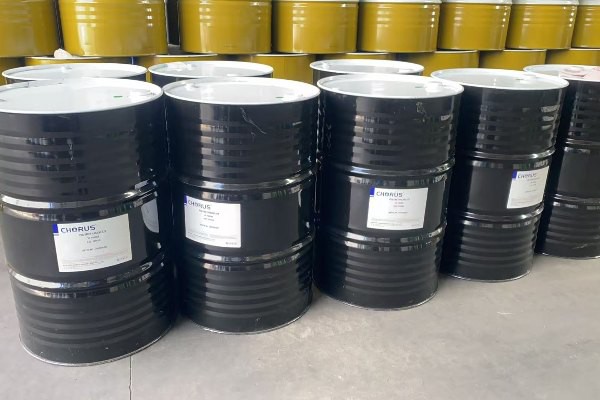
Chorus understands the complex industrial lubricants. Based on the vast Chinese industrial market, we specialize in providing customers with high-performance synthetic base oils and lubricant additive packages.
e.g.
Multifunctional Gear Oil Additive Package
Industrial Screw Air Compressor Oil Additive Package
With premium raw materials and market-proven additive formulas, we enable oil blenders to easily produce quality industrial lubricants that meet various standards at a more competitive cost.
Get in touch for more industrial additives technology.