
Sulfurized Iso-butylene vs. Chlorinated Paraffin: How to Choose EP Additives for Gear Oils
Leave a message
In gear oil formulations, the choice between Sulfurized Iso-butylene (SIB) and Chlorinated Paraffin (CP) is acontroversial topic. Both are mainstream EP/AW agents; their performance profiles.
Different Mechanisms of Action
Chlorinated Paraffin (CP): Forms FeCl₂and FeCl₃ films on friction surfaces. These films have a low melting point and shear strength, making them suitable for lubrication under medium to low loads. However, chlorinated paraffin hydrolyzes upon contact with water, generating hydrochloric acid (HCl), which corrodes metals.
Sulfurized Iso-butylene (SIB): Forms FeS and FeSO₄-FeS mixed films on friction surfaces. These films have high melting points and excellent hydrolytic stability; the lubricating effect remains effective up to 800°C. Consequently, sulfur-based extreme pressure additives are used in high-temperature and high-load operating conditions.
Different Load-Carrying Capacities
Under comparable conditions, chlorine-based EP additives are appreciably lower than those of sulfur-based ones. SIB typically has a sulfur content of 40%–46%. Under frictional heat, the C-S bonds break, releasing active sulfur to form a stable EP protective film. While CP offers excellent extreme pressure and anti-wear performance, it is notably inferior in terms of stability (e.g., hydrolytic stability) and corrosion resistance.

Environmental Trend: The Phase-Out of Chlorinated Paraffin
The core disadvantages of CP lie in its environmental impact and toxicity. Right now, using organic chlorides in automotive gear oils isn't allowed in the United States or Western Europe. In China, CP still has a market in metalworking fluids (particularly for short-term EP needs with difficult-to-machine metals), but in gear oil formulations, it has been largely replaced by sulfur-phosphorus-based systems.
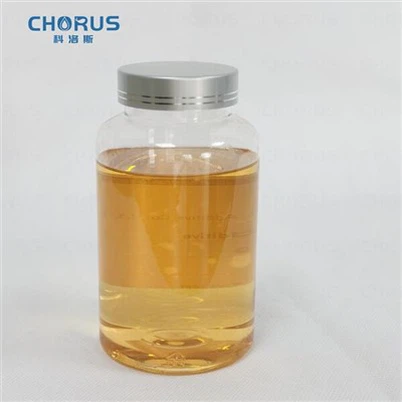
Chorus T321 Sulfurized Iso-butylene (SIB) is a high-sulfur, chlorine-free extreme pressure (EP) oil additive. It features low odor, contains no chlorine, and delivers excellent EP performance. It is suitable for use in gear oils. Inquiries for the latest quotation are welcome.
How to Choose Gear Oil EP Additives?
Selecting an EP additive for gear oils should not be based solely on the EP value. Stability, corrosiveness, and environmental compliance are equally indispensable criteria. From a long-term trend perspective, the gear oil sector is expected to remain stable in the short to medium term.
Chorus offers a series of EP/anti-wear additives for automotive gear oils, industrial gear oils, and other industrial lubricants. Our products offer excellent performance, and we provide EP/anti-wear additive solutions for gear oils. We welcome inquiries and are happy to provide relevant technical.