
What are Common Water-Soluble Rust Inhibitors and Their Applications.
Leave a message
Water-soluble Rust Inhibitor
Water-soluble rust preventive is a commonly used temporary rust preventive material. It uses water as a medium, is safe, convenient and easy to clean, and is one of the indispensable temporary rust preventive in the manufacturing industry.
At present, water-soluble rust preventive is mainly used for rust prevention between processes in metal product processing and metalworking fluids.
As a temporary protection, water-based rust preventive is excellent in short-term rust prevention between metal processing processes, including rust prevention in heat treatment, rust prevention in quenching, rust prevention between machining processes, rust prevention before assembly, and rust prevention before painting.
Inorganic salt water-based rust preventive liquid
Sodium nitrite water-based rust preventive liquid is the earliest water-based rust preventive. it was widely used due to low cost, easy to use, good rust prevention before. However, nitrite is restricted as a carcinogen nowadays.
The common formula is to use NaNO2 and Na2CO3 together. The two can be applied to different situations by adjusting different ratios. For example, when the parts need to be fully immersed, 3%~5% NaNO2 and 0.5% Na2CO3 are used; when the process requires spraying, 5%~8% NaNO2 and 0.5% Na2CO3 are used.
Chromate-type rust preventive has a good rust prevention effect and is still widely used in some fields. However, chromium can cause heavy metal pollution, so its use is restricted.
Phosphate-type rust preventive liquid can form a hard phosphating film, thereby playing a role in rust prevention. However, the traditional process is complicated, and energy-intensive, and the phosphating residue produced is a hazardous solid waste, which is easy to cause eutrophication of water. Therefore, the phosphating type rust preventive liquid is restricted.

Organic water-based rust inhibitor
Common organic rust inhibitors include heterocyclic compounds, carboxylic acid compounds, organic amines, and esters.
Heterocyclic compounds include benzotriazole, imidazoline, thiazole, quinoline, etc.
Benzotriazole is a widely used rust inhibitor as water-based rust inhibitor, which can be applied to a variety of metals and alloys.
Water-soluble imidazoline is obtained by modifying imidazoline intermediates, and has good rust and corrosion inhibition properties, especially under acidic conditions. Water-based rust inhibitor formulas with water-soluble imidazoline as the main agent have been widely used in various environments and markets.
Carboxylic acid compounds not only have excellent rust prevention ability, some carboxylic acid derivatives also have certain anti-wear ability.
Carboxylic acids are the most widely used water-soluble additives today, mainly monoacids, diacids and triacids. When used, they also need to be neutralized with alcohol amines to generate carboxylic acid amines, which is a relatively good rust inhibitor.
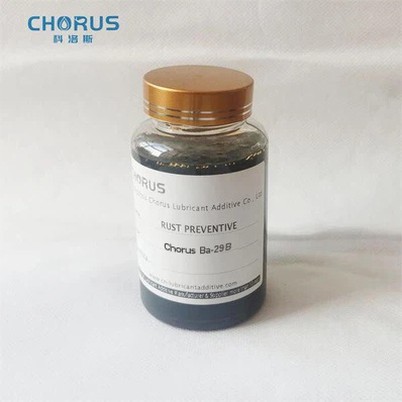
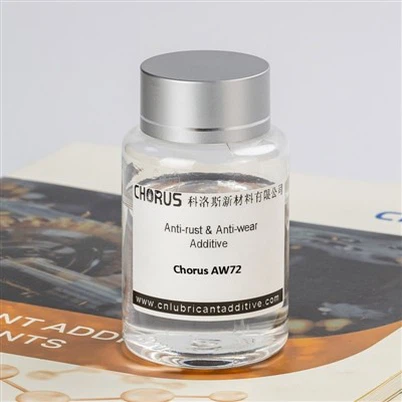
Chorus Company provides organic polycarboxylic acids, which are very effective ferrous metal corrosion inhibitors.
They can be used in water-based metalworking fluids, water-based cleaning agents, water-based quenching fluids, water-based HFC hydraulic fluids, engine coolants, etc.
Chorus also offers a portfolio of rust inhibitors for rust-preventive oils.
Get in touch for the detailed product data-sheet.