
Brief analysis of engine friction hazards: wear sources and strategies
Leave a message
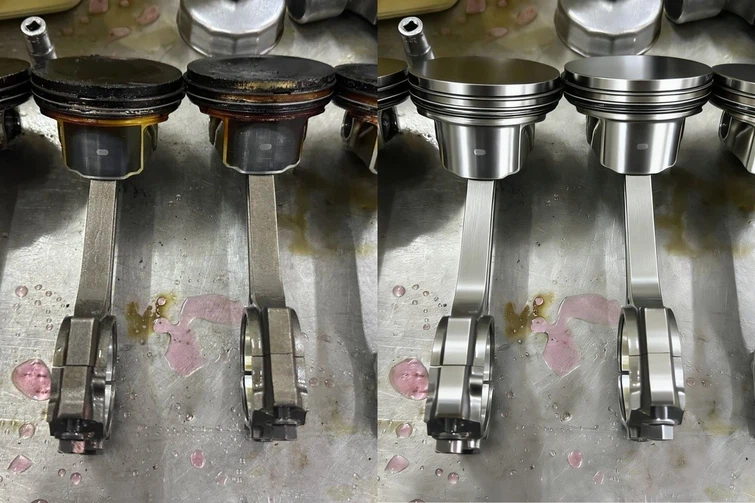
When the engine is working, the engine parts like the piston, piston ring, and cylinder wall are operating at high temperatures, high speeds, and high pressures.
The friction between metals not only increases the energy consumption, and the large amount of heat, which will make the friction part wear, melt, and even sinter.
Adding an anti-wear additive to the engine oil can form a lubricant oil film on the wear metals' surface to avoid metal wear, and clean and cool down the metals.
4 types of friction
- Dry friction:
There are no lubricant additives on the friction parts. Due to the direct connection of the microscopic peaks on the surfaces, they fuse. It needs to overcome a large adhesive force when in movement, which causes wear and friction, consumes energy, and generates heat.
- Boundary friction (boundary lubricant)
The friction surfaces have no lubricating friction,
There is a very thin boundary lubricant oil film (adsorption film and reaction film) between the friction surfaces. When the film is strong enough, the low friction coefficient is independent of viscosity. The oil film breaks, and it turns into dry friction. The adsorption film has poor temperature resistance; the reaction film is more stable but may corrode the metals.
- Liquid friction: (Liquid lubricant)
The flow lubricant oil separates the friction surfaces completely, and the friction only occurs in the oil molecules with an extremely low friction coefficient of 0.01-0.001, and the resistance is mainly from the viscous force of the lubricant oil.
- Mixed friction:
According to the different ingredients, mixed friction can be divided into dry friction and semi-friction, which is mainly composed of dry friction and boundary friction, and semi-liquid friction, which is composed of liquid friction and boundary friction.
Actually, the engine is common in such an unstable lubrication state.
The influence 4 types of friction to engine.
|
Project |
Dry friction |
Boundary friction (boundary lubricant) |
Liquid friction (Liquid lubricant) |
Mixed friction (mixed lubricant) |
|
Contact situation |
It likes 2 pieces of sandpaper rubbing against each other directly. |
It likes sandpaper covered with a layer of moisturizer, rubbed onto the moisturizer. |
It likes that the 2 sandpapers sink into the water and can not contact each other. |
It's like the sandpaper is covered with oil, but not completely. Some parts can rub against the sandpaper. |
|
The influence on the engine |
It wears fast and cost much oil, and even crashes and burns. |
It usually slides a little, but when the moisturizer wears off, it turns back into sandpaper, namely, dry friction. The parts can even get corroded. |
It has almost no wear, the engine operates stably, and is energy-saving. |
The most common situation of the engine, and the friction degree is medium. |
How to deal with the wear and friction in the engine?---Chorus solution
The method of engine oil for anti-wear has the following 2 methods.
In the mechanism operation, wear and friction are unavoidable. Sometimes, the necessary friction is the basis of the equipment's normal operating. The surfaces of moving components have a certain degree of friction. How to control the friction and wear is a highly technical and professional task.
1. Fluid anti-wear:
By improving the lubricant base oil's viscosity to form a physical adsorption film, reduce friction coefficient, and improving anti-loading capacity.
The thickness of the oil film and the lubricant's viscosity are related to its adsorption to the metal surface. The high viscosity is more likely to form an oil film than a lower viscosity.
Viscosity improve index additive T602HB has the double effects of thickening and viscosity improving, which can improve the engine oil viscosity to increase the lubricity.
2. Chemical antiwear:
By adding high efficiently anti-wear additive can increase the loading capacity greatly. In the lubricating process, a polar substance reacts with metal surfaces to form a chemical adsorption. It can improve the film strength to 5-10 times compared with a physical adsorption film, and improve the engine antiwear performance greatly.
Chorus is a professional lubricant additives supplier in China. We can provide you with different additives based on your different wear situations.
Contact us and get professional solutions.