
A Brief Look at Metal Deactivators in Lubricant
Leave a message
In the process of use, the lubricant is oxidized and deteriorated by heat and light in the presence of oxygen. If the lubricating oil contains metals, such as copper, iron, and other metal ions, even if the content is very low, they can accelerate the free radical chain reaction in the oxidation process of the oil, accelerate the oxidation rate of the oil, and generate acid, sludge, and precipitation. Acid can cause corrosion and wear of metal parts; Sludge and sedimentation will thicken the oil, causing the bonding of the piston ring and the blockage of the oil circuit, thereby reducing the performance of the oil.
For lubricating oil, it is usually the combination of antioxidants and metal deactivators that has a synergistic effect of the two, thus greatly improving the antioxidant capacity of lubricating oil.

Understanding the Mechanism of Metal Deactivators in Lubricants
Metal Deactivator also called Metal Passivator. Metal deactivators are lubricant additives that inhibit the catalytic effect of metals on oxidation and corrosion.
In the same oil, different metal deactivators have different effects, which can be explained by the action mechanism of metal deactivators. Two mechanisms of action of metal deactivators:
Film formation
That is, a chemical film is formed on the surface of the metal to prevent the metal and its ions from entering the oil and weaken its catalytic oxidation of the oil. This chemical film can also prevent active sulfur, organic acids or free radicals from attacking the metal surface, protecting the metal surface.
chelation
That is, it reacts with metal and metal ions to form stable chelates or reacts with precipitated metal ions to form insoluble substances, which has a masking effect on the catalytic activity of metal ions.
Metal Deactivator Application and Selection for Enhanced Lubrication
Metal deactivators are mainly used in automotive lubricants and industrial lubricants, including greases, usually suitable for lubricants in the following applications:
- Lubricants in contact with transition metal elements or metal substrates.
- Lubricants for heavy-duty equipment. In order to adapt to the requirements of the working condition, this type of lubricant must use active sulfur, and active sulfur may have adverse reactions with the metal surface, at this time metal deactivator will play protective role, such as benzotriazole (BTZ) is an effective metal deactivator for copper and copper alloys.
- Lubricants that need to solve hard water problems in the application process. For example, DTPA(diethylenetriamine pentaacetate, diethylenetriamine pentaacetate) can minimize the reaction of metal ions with fatty acids in the lubricant to produce hard water soap.
Issues to consider when selecting metal deactivators:
- The material of the protected metal material (copper, iron or steel, bronze, aluminum alloy, or galvanized steel);
- Application base fluid (mineral oil, water, PAO, etc.);
- The frequency of lubricant use and whether it is in repeated contact with the protected metal parts;
- Use effect and duration in specific application environment;
- Additional properties, including anti-emulsification, emulsification, appearance, toxicological properties, lubricity, etc.
In particular, for the selection of metal deactivators for Metalworking fluids, the main considerations are as follows:
- Type of metal processed;
- The hardness of the water;
- The type of tool in the machining process;
- Use temperature.
- Use effect and duration in specific application environment;
- Additional properties include anti-emulsification, emulsification, appearance, toxicological properties, lubricity, etc.
Main metal deactivators
Phenyltriazole and phenyl triazole derivatives
Benzotriazole is an inhibitor of non-ferrous metals such as copper and silver, which can form chelates with copper and is an effective metal deactivator.
However, benzotriazole is water-soluble, almost insoluble in lubricating oil, and it is necessary to add cosolvents to dissolve in mineral oil.
In view of the poor solubility of benzotriazole, benzotriazole derivatives have been developed. The combination of benzotriazole derivatives and antioxidants has a good synergistic effect on metal deactivation. At present, a series of metal deactivator products of benzotriazole derivatives have been developed, such as methyl benzotriazole (TTZ), N.N' -dialkyl aminomethyl benzotriazole,N,N '-bis (2-ethylhexyl) -methyl-1h-benzotriazole-1-methylamine, etc.
Thiadiazole and thiadiazole derivatives
Thiadiazole has a good ability to inhibit copper corrosion, and can inhibit the catalytic oxidation of metals and metal ions to oil products, and is a non-ferrous metal deactivator
Its derivatives include thiadiazole polysulfide, 2,5-dimercapto-1,3, 4-thiadiazole (2,5-dimercapto-1,3,4thiadiazole), DMTD), 2-mercaptobenothiazole (2-mercaptobenothiazole,MBT), 2-mercaptobenothiazole sodium (sodium2-mercaptobenothiazole) and other compounds.
Heterocyclic compound
In addition to excellent antioxidant properties and copper corrosion inhibition properties, heterocyclic compounds have good oil solubility, thermal stability, and anti-emulsification properties, and have good synergistic effects on metal deactivation with phenolic antioxidants and amine antioxidants.
Synergistic effect of metal deactivator and antioxidant
Metal deactivators are generally not used alone, but combined with antioxidants, and the combination of the two has significant synergistic effects.
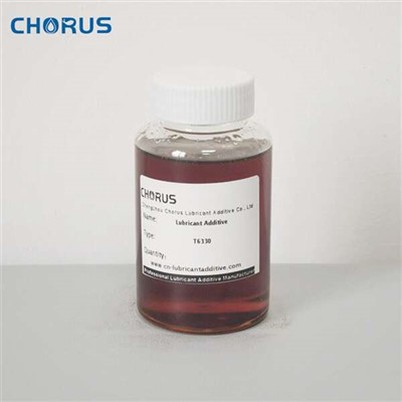
CHORUS offers copper corrosion inhibitors for lubricant additives and metal working fluids.
- Oil-Soluble Metal Deactivators - mainly used for lubricating oils and metal working fluids.
- Water-Soluble Metal Deactivator - mainly used in coolant and other water-mix formulations.