
OCP vs PMA VII: How to Choose for Your Lubricant
Leave a message
Blending viscosity index improvers (VIIs) into lubricating oils widens the operating temperature range-the oil stays fluid enough for cold starts while retaining sufficient viscosity at high temperatures. That is the principle behind multigrade engine oils. OCP (olefin copolymer) and PMA (polymethacrylate) are the two most common VII types, and they differ in thickening efficiency, shear stability, and low-temperature performance. This guide explains how to choose between them.
OCP viscosity index improvers and PMA viscosity index improvers (VIIs) are two mainstream viscosity index improvers used in lubricants. While both can enhance oil viscosity as well as high- and low-temperature performance, they exhibit fundamental differences in practical application.
The comparison is as follows

1. Thickening Efficiency and Viscosity-Temperature Performance
OCP: Offers high thickening efficiency; its polymer chains expand at high temperatures to effectively boost high-temperature oil viscosity. However, its low-temperature fluidity is relatively poor, so formulating low-temperature grades (e.g., 5W/10W) typically requires adding a pour point depressant (PPD, such as PMA pour point depressant).
PMA: Functions as both a thickener and a pour point depressant. It exhibits smoother viscosity variation across high and low temperatures along with a higher Viscosity Index (VI), generally eliminating the need for additional pour point depressants.
2. Shear Stability (Shear Resistance)
OCP: Possesses longer molecular chains that tend to cleave under high-shear conditions, leading to greater permanent viscosity loss. It is suitable for applications with lower shear stability requirements, such as internal combustion engine oils.
PMA: Possesses a compact molecular structure with superior shear stability, enabling it to better maintain long-term viscosity stability during use. It is widely applied in lubricants with high shear resistance demands, such as gear oils and automatic transmission fluids (ATFs).
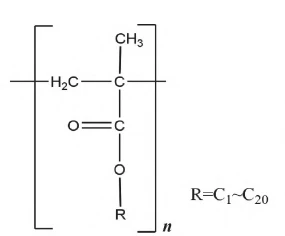
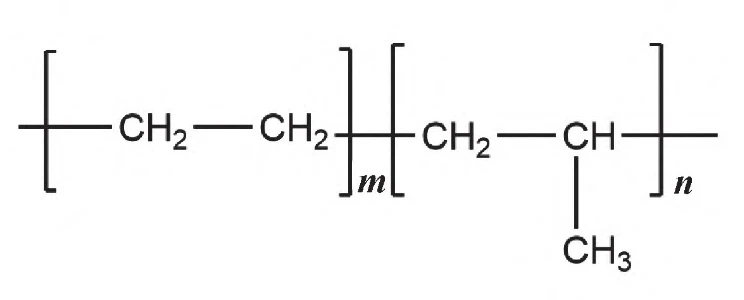
Polymethacrylate Olefin Copolymer
3. Thermal Stability
OCP: Exhibits strong thermal stability and superior high-temperature resistance, remaining stable without decomposing easily up to approximately 250°C.
PMA: Features relatively lower thermal stability and may begin decomposing at extreme temperatures exceeding 200°C to generate volatile substances, yielding weaker high-temperature durability.
4. Impact on Engine Cleanliness OCP
OCP: Conventional types lack detergent-dispersant functions and act purely as thickeners. Dispersant-type OCPs (grafted with polar functional groups) additionally function to disperse sludge.
PMA: Has a neutral impact on cleanliness; however, due to its lower thickening efficiency compared to OCP, a higher treat rate is required for equivalent viscosity, which increases the tendency for carbon deposit formation.
5. Application Scenarios
OCP: Ideal for high-shear conditions, high-temperature oil film strength demands, and extended-drain applications (e.g., racing oils, long-drain heavy-duty diesel engine oils). Demonstrates high compatibility with paraffinic base stocks, maximizing its thickening power and high-temperature performance advantages.
PMA: Ideal for low-viscosity multigrade engine oils (e.g., 0W-20, 5W-30) requiring excellent low-temperature startability and a flat viscosity-temperature curve. Combines pour point depressant and thickening capabilities to simplify formulation. Offers broad base stock compatibility, though formulations may require optimization when blended into highly paraffinic base oils to achieve peak performance.
If cost is a concern but you still need strong high-temp thickening, OCP gets the job done. If you're after well-rounded performance across temperatures, longer service life, and want to cut out the extra pour point depressant step, PMA is the better choice.
Chorus supplies lubricant additives, including both OCP and PMA viscosity index improvers. We quality-test every product and will match you with the right one for your formulation. Contact us for a quote.