
A General Introduction To Rust Preventive Additives.
Leave a message
Rust is a mixture of oxides and hydroxides formed on metal surfaces by the action of oxygen and water, sometimes containing carbonates formed by contact with carbon dioxide in the air.
For example:
- the main iron rust is iron oxide, which is mainly composed of ferric oxide hydrate and iron hydroxide, usually, it is red.
- Copper rust is generally composed of basic copper carbonate, which is the main component of green rust generated on the surface of copper. It is an inorganic compound with the chemical formula Cu2 (OH) 2CO3.
The problem of metal corrosion is widespread in various industries of the economy. Metal corrosion can greatly damage the performance and commodity value of metal products, and even cause major malfunctions, leading to equipment scrapping. This is particularly true for heavy equipment, where corrosion can result in substantial economic losses. To avoid rusting, people have adopted various methods, and Rust Preventive oil is the most common protection method to protect metal from corrosion. In the industrial fields, the rust of iron and steel should be given the most attention. Rust is an extremely serious problem causing damage to steel products and mechanical equipment.
Here, we mainly discuss anti-rust additives for steel.
Rust Preventive Additives are also known by several other names, including:
- Ani-rust additive
- Rust Inhibitor
- Corrosion Inhibiting Additives
- Corrosion Inhibitor Additive
- Rust and Corrosion Inhibitors
Chorus Lubricant Additives Company supplies high-performance anti-rust additives for engine oils, industrial lubricants, metalworking fluids, and other industrial corrosion inhibition applications.
Our rust-preventives inhibit corrosion even in harsh conditions. These formulations are sufficiently tested in the vast Chinese metal working market, with market-proven anti-rust performance.
For reliable & rust prevention, long-lasting and eco-friendly metal protection. Contact Chorus® for the excellent and cost-effective corrosion-resistant additives.
A Brief History of Rust Preventive Additives
- Initially, humans used butter, lanolin, and petroleum lipids for metal rust prevention
- In the 1930s, synthetic rust inhibitors were gradually developed. oil-soluble petroleum sulfonate rust inhibitors emerged, followed by carboxylic acids such as alkyl or alkenyl succinic acid and acid phosphate rust inhibitors. Carboxylic acid-type rust inhibitors such as alkyl or alkenyl succinic acid were widely used in turbine oil.
- After World War II, anti-rust oil and anti-rust additives developed rapidly and were widely used in the rust prevention of metal products.
- In the 1950s, numerous rust inhibitors such as polyol fatty acid esters, organic amines, organic amine salts, heterocyclic compounds, oxidized petroleum oils, oxidized paraffin wax and its metal salts, and benzotriazole emerged

How does the anti-rust additive work?
Rust inhibitors are mostly polar substances, and their molecular structure is characterized by:
-
One end is a highly polar functional group with hydrophilic properties, and the strength of polarity has an impact on rust prevention;
-
The other end is a non-polar alkyl group with hydrophobic properties, and the length of the alkyl chain also affects its rust resistance.
When oil products containing rust inhibitors come into contact with metals, the polar groups in the rust inhibitor molecules have strong adsorption force on the metal surface, forming a tight single-molecule or multi-molecule protective layer on the metal surface, preventing the corrosive medium from coming into contact with the metal, thus playing a rust prevention role.
Rust inhibitors also have a solubilizing effect on water and some corrosive substances. By solubilizing these substances in micelles, they have a dispersing or deactivating effect on corrosive substances, thereby eliminating the erosion of metals by corrosive substances. Of course, alkaline rust inhibitors also have a neutralizing effect on acidic substances, preventing metals from being corroded by acids.

There are two types of adsorption of rust inhibitors on metal surfaces: physical adsorption and chemical adsorption:
- The dipole of the polar molecules of rust inhibitors undergoes electrostatic attraction with the metal surface, forming physical adsorption, such as sulfonates;
- If the adsorbed molecules can react chemically with metals, chemical adsorption is formed, such as alkenylsuccinic acid.
Main Types of Rust Inhibitors
Commonly used rust inhibitors are divided into five categories based on their structure:
- sulfonates
- carboxylic acids and carboxylic acid derivatives
- esters
- organic phosphates and salts
- organic amines
- and heterocyclic compounds.
Sulfonate
Sulfonate is an early rust inhibitor used.
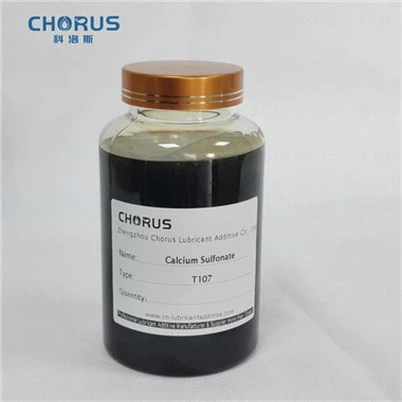
Metal sulfonates typically choose barium, calcium, or sodium salts. These polar compounds can enhance rust resistance, and wet metal surfaces, and form a more complete and uniform coating. Sulfonates have an affinity for metals and can remove water from the metal surface. Metal sulfonates also assist in dissolving wax and oxidized wax in liquids.
Barium sulfonate and calcium sulfonate provide the best drainage performance, while sodium sulfonate is the most suitable for producing emulsified (water-based) rust inhibitors.
Metal sulfonates have a hydrophilic (polar) head, a hydrophobic (non-polar) tail that adheres (chemically adsorbs) to the metal surface, and an extended tail that moves away from the metal and provides a barrier film. Metal sulfonates themselves provide a barrier between the metal surface and the external environment.
The hydrophobic tail of wax or oxidized wax molecules entangles with sulfonate molecules, forming a membrane that is stronger and more hydrophobic than sulfonate or wax alone.
For example, in the same testing environment
A solvent containing 10% sulfonates or oxidized wax can provide 30 days of corrosion protection in a humid box;
However, a combination of 10% wax and sulfonates can provide over 60 days of corrosion protection in a humid box.

Sodium Sulfonate has anti-rust and emulsifying properties and is commonly used in anti-rust emulsified oils (liquids). It is used for rust prevention during manufacturing processes and plays a role in lubrication, cooling, rust prevention, and cleaning in metal cutting fluids.
Generally, the larger the molecular weight of sodium sulfonate, the better its rust-prevention performance.
Barium Petroleum Sulfonate is the earliest and most widely used rust inhibitor in China. It has good rust prevention, excellent corrosion resistance to various metals, as well as excellent water displacement and acid neutralization performance, especially outstanding saltwater corrosion resistance.
Generally, neutral, low-base, or medium-base sulfonates are used as rust inhibitors. Sulfonates with high-base are often used as detergents in engine oil, playing a neutralizing and detergence role. This is because the higher the base value of sulfonates, the worse their anti-rust performance.
| Item | Total Base Number, mgKOH/g | Rust Preventive Days |
| Calcium Petroleum Sulfonate A | 0 | ﹥50 |
| Synthetic Calcium Sulfonate B | 0 | ﹥50 |
| Calcium Petroleum Sulfonate C | 22 | ﹥50 |
| Synthetic Calcium Sulfonate D | 27 | ﹥50 |
| Calcium Petroleum Sulfonate E | 305 | 14 |
| Synthetic Calcium Sulfonate F | 400 | 8 |
Dinonyl Naphthalene Sulfonate is another type of synthetic sulfonate, which can be classified into several types: barium salt, calcium salt, zinc salt, and ammonium salt.

Barium Dinonyl Naphthalene Sulfonate has good oil solubility and rust resistance, but its saltwater resistance is not as good as that of barium petroleum sulfonate. Its use is similar to that of barium petroleum sulfonate, and it is particularly suitable for modulating hard film and soft film rust prevention oils. It is also commonly used in lubricating greases and is an important type of rust inhibitor.
Some barium salts of Dinonyl Naphthalene Sulfonate also have anti-emulsification properties, such as neutral barium salts of Dinonyl Naphthalene Sulfonate.
Carboxylic acids, carboxylate salts, and their derivatives
Long chain fatty acids have a certain degree of rust resistance, and fatty acid metal salts usually have stronger rust resistance than original fatty acids.
Carboxylic acid type rust inhibitors have good moisture resistance, and the louver box exposure test effect is also good, but they lack acid neutralization performance and have poor corrosion resistance to lead and zinc.
Its metal salts have good corrosion resistance to metals.
Most carboxylic acids or carboxylic acid metal salts have poor resistance to salt water and water displacement.
There are many carboxylic acid based rust inhibitors, and their performance varies greatly with different structures. Nonylphenoxyacetic acid is a black metal rust inhibitor with good oil solubility, and its amine salts and imidazoline salts are also good rust inhibitors;
For example, N-oleoyl sarcosine and its octaammonium salt imidazoline salt are also effective rust inhibitors for ferror and non-ferrous metals. These are monocarboxylic acid rust inhibitors, as well as rust inhibitors containing two carboxylic acids. The main representative and widely used rust inhibitor containing two carboxylic acids is alkenyl or alkyl succinic acid, mainly dodecenyl succinic acid. Its characteristics are good rust resistance, low dosage, and insensitivity to water. It is mainly used in turbine oil, and is also widely used in hydraulic oil and guide rail oil.
Among carboxylate rust inhibitors, the more important ones are Zinc naphthenate and Lanolin magnesium soap. Zinc naphthenate has good oil solubility and has rust-prevention effects on both ferrous and non-ferrous metals. It is usually used in combination with barium petroleum sulfonate at a dosage of 2% to 3% (mass)) to seal rust prevention oil.
Esters
Adipic acid and benzoic acid have anti-rust effects in water. If they are esterified, oil-soluble anti-rust agents can be obtained.
Representative products include sorbitol monooleate (Span-80), pentaerythritol monooleate, dodecenylsuccinate and lanolin.
Span-80 is a commonly used rust inhibitor and a surfactant that combines rust prevention and emulsifying properties. It has good results in louver box tests and has moisture-proof and water-displacement properties. It is used in various sealing and cutting oils.
The rust resistance of different fatty acid sorbitol esters varies, generally oleic acid esters>stearic acid esters>lauric acid esters.
The rust prevention performance of monoesters and triesters is similar, and different esters have a certain corrosiveness to lead.
Compared to triesters, monoesters have greater corrosiveness to zinc.
Dodecenylsuccinic acid half ester has good rust prevention and anti-emulsification properties and is suitable for anti-oxidation and anti-rust turbine oil.
Lanolin is a complex lipid substance secreted by the sheep body and attached to wool. Before spinning, wool must be degreased and washed to remove lanolin. Retrieve, deodorize, and decolorize from the cleaning solution, and after drying, obtain a yellow-brown fatty substance, namely lanolin, which can be used as a rust inhibitor.
Lanolin is a natural fat that, although an ancient rust inhibitor, is still widely used today. Lanolin is not only an anti-rust agent, but also a film-forming material for soft film anti-rust oil.
The low-temperature characteristics and adhesion of lanolin and its derivatives as rust inhibitors are excellent. Lanolin has antioxidant ability to air, good stability of the coating, and also has characteristics of emulsifying power and water retention.
Due to the strong hygroscopicity and poor solvent solubility of lanolin, the hydroxyl value can be reduced within the range of not reducing rust resistance.
Lanolin-based rust inhibitors generally exhibit good rust resistance, especially in seawater and saltwater, with excellent corrosion resistance. However, they have a strong affinity for metals and poor degreasing performance.
The combination of lanolin and sulfonates can achieve excellent rust prevention and degreasing properties due to the synergistic effect. Making metal soap from lanolin can improve water displacement and hand sweat displacement, and can be used to produce displacement type rust preventive oil.
Organic phosphate and its salts
Organic phosphates are mainly orthophosphates, phosphites, and phosphonates. Orthophosphate is mainly used as a rust inhibitor.
Phosphate-type rust inhibitors include:
Single or double dodecyl phosphate dodecoxypropyl isopropanolamine salt, which has antioxidant, rust preventive, and anti-wear properties;
Alkyl imidazoline phosphate salt has rust and wear resistance properties.
Phosphate esters can also be used as extreme-pressure anti-wear additives and are often used in lubricants and metalworking oils. It can produce excellent rust prevention effects when used in combination with petroleum sulfonates and sorbitol anhydride monoesters.
Organic amines, their salts, and heterocyclic compounds
The commonly used amine salts in China include N-oleic acid sarcosine octadecylamine salt and heptadenyl imidazoline succinate. Organic amine rust inhibitors have good resistance to moisture, water displacement, and acid neutralization properties, but the results of the hundred leaf box test are poor, with greater corrosion to lead and certain corrosion to copper and zinc. When applied, caution should be exercised.
Benzotriazole is the most commonly used rust inhibitor among heterocyclic compounds. It is an excellent corrosion inhibitor and anti discoloration agent for non-ferrous copper and its alloys, and also has a certain rust-prevention effect on steel.
However, benzotriazole is insoluble in mineral oil and soluble in water. Generally, when adding mineral oil, a co-solvent should be added: it can be dissolved in ethanol, propanol, or butanol first, and then added to mineral oil; It can also be dissolved in co-solvents such as butyl phthalate, dioctyl phthalate, tributyl phosphate, or cresyl phosphate before adding mineral oil.
Benzotriazole derivatives effectively address solubility challenges across applications:
Chorus TTA-39: Oil-soluble, it is an ideal copper corrosion inhibitor for turbine oils, engine oils, gear oils, hydraulic oils, and greases.
Chorus TTA-42: Soluble in water and glycol systems, a liquid alternative to solid BTA/TTA. It is widely used in the formulation of antifreeze (coolants), water-glycol hydraulic fluids (HFC), and metalworking fluids.
Heterocyclic compounds also include nitrogen-containing heterocyclic compounds, such as 1,3,4-thiadiazole and its derivatives. The molecular structure of these compounds is relatively compact. When adsorbed on metal surfaces, it is beneficial for increasing the strength of the oil film and effectively inhibiting the corrosion of sulfur and phosphorus elements in lubricating oil. As a class of nitrogen-containing heterocyclic compounds, 1,3,4-thiadiazole and its derivatives, the lone pair electrons of heteroatoms in the molecule can chemically adsorb with metals, forming a dense oil film passivation film on the metal surface. This passivation film can isolate metal catalytic decomposition and prevent acidic products from corroding metals, so it can be used as an anti-corrosion additive for lubricating oil.
CHORUS offers a selection of corrosion inhibitor additives for lubricants and metal working fluids, and rust-preventive oils Including
- Anti-rust additive components;
- Anti-rust additive packages;
- Water-soluble anti-rust additives;
- Copper, Aluminum, Zinc Corrosion Inhibitors;
- and other rust-inhibitor additives.
Get in touch to learn more.